
Introduction to fast
Car lighting systems rapidly evolved over the past two decades from traditional bulbs to smart systems that are able to automatically adjust the beam. This development improves vision, but it raises challenges related to(Glow) And the alignment of laws and safety.
Classification of basic species - description, common and scientific names, and shortcuts
1) Halogen (Halogen)
The common name: Halogen
Scientific name / Technician: Tungsten-halogen incandescent lamp
A common abbreviation: — (Remember according to the base of the installation: H4, H7 ... as symbols acceptable)
Short specifications: Moderate output, color temperature is usually 3000-3500K, lumin/watt efficiency compared to LED/HID, practical age ~ 500-1200 hours.
features: Cheap, easy to replace and compatible with most traditional reflective mirrors.
flaws: Consumption of higher energy, lower brightness, short operating life.
(Exemplary: Halogen).
2) Xenon / High -density (Xenon / HID — High-Intensity Discharge)
The common name: Xenon or hid
Scientific name: High-Intensity Discharge lamp (usually: Xenon D1S, D2S…)
Common shortcuts: HID, D1s, D2S
Short specifications: The colorful color (4000- 6000K published)Break. A longevity (2,000-3,000 hours).
features: East and its extent is better to lead the night.
flaws: It can cause greater glow to mark the wrong or modified lenses; The cost and installation equipment is higher.
(Exemplary: D2S tube).
3) LED (Light Emitting Diode)
The common name: LED
Scientific name: Light Emitting Diode modules / arrays
A common abbreviation: LED
Short specifications: Lumin/Watt's efficiency, long life (10,000+ hour), An immediate operating response, the possibility of forming optical packages with electronic control. Flexible color heat from 2700k to 6500K+.
features: Energy efficiency, tight and flexible design, long life, ease of integration with smart systems.
flaws: Bad design or poor lenses may increase glow; There are discussions and regulations about the brightness of some LED groups and their impact on other drivers.
4) LED lights lamps / Adaptive Driving Beam (Matrix LED / ADB)
The common name: LED or Adaptive Driving Beam
Scientific name: Matrix LED / Adaptive Driving Beam systems
Common shortcuts: ADB, Matrix LED
Short specifications: It is made up of tens/hundreds of LED units that can be turned on/stop or reduce the intensity of each piece independently to form a dynamic beam pattern.
features: It allows “Highlight” With the blocking of small areas in front of other vehicles to reduce glow - the lighting capacity is improved without dazzling the opposite drivers.
flaws: Higher cost and electronic complexity; It must be designed and Kalibrate to fulfill strict standards. Studies monitored that advanced systems reduce glow compared to some traditional HID.
5) Laser (Laser headlights)
The common name: Light (Laser)
Scientific name: Laser-based illumination modules (Usually it is used as a concentrated source transformed via phosphorus to produce a safe light)
Common shortcuts: Laser headlamps
Short specifications: Very high light intensity with low energy consumption; It allows long lighting and slim designs. A long life.
features: A long range and energy efficiency.
Disadvantages/restrictions: Organizational restrictions in some markets (Like the United States previously) Because of the concerns of safety and glow; Manufacturing is complex and high cost.
6) OLED and DRL and interior designs (Others)
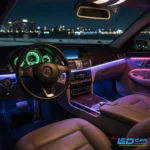
OLED: Often for signs or interior lighting (It is not designed as a header of the vision far), Thin and distinctive designs.
DRL (Daytime Running Lights): Daylights to improve the car vision during the day, often LED.
Shortcuts: OLED, DRL.
Important technical indicators for comparison (Practical value for the consumer or technical)
The intensity of the lighting (Lumen, CD) And the field of distribution: It determines the range and vision.
Color (K): Less than 3500K is closer to yellow warmth; 5000 -6500k blue/white clearly better for humans, but causes more glow.
Efficiency (Lumen/Wat): LED and Laser the best, then HID, then halogen.
Working age: LED/laser > HID > halogen.
The cost and ease of maintenance: Halogen is cheaper, LED/hid is more expensive and complex for maintenance.
(An important safety point: Significant efficiency/brightness is not always better if it results in an excessive glow for other drivers).
What has studies and reports on safety and glow showed?
Safety standards and assessments (IIHS) It has shown that advanced systems such as Adaptive Driving Beams reduce glow and improve road lighting compared to some traditional or non -adaptive bulbs..
On the other hand, there is general concern about increasing drivers complaints from “Brightness” Some LED lights are badly designed; The appeal to impose strict criteria or improve regulatory controls.
Organizational updates in the United States allowed the introduction of ADB systems within FMVSS standards after developing concrete performance conditions, indicating an organizational transformation that supports advanced technology with safety control.
Summary schedule (fast)
Type abbreviation efficiency age cost extent possible glow
Halogen - / H4, H7, low, low low-medium
HID / Xenon HID / D1s,D2S medium average average-high-high-high
LED LED LED is high, average-high design
Matrix LED / ADB ADB / Matrix is very high, very long, high, low when good design
Laser Laser is very long, very high, special organizations / It depends on the design
Practical advice for the consumer / Car
- If your goal is to see a better price: The LED after-Market may give brightness but beware of cheap products that cause glow or not matching the plugs.
- Butblicah [Omen: Choose manufactured systems equipped with a guarantee and identical to the specifications (ECE, SAE, FMVSS) And the alignment examination (aiming) always.
- When replacing a bulb: Do not change the type of bulb (For example, from Halogen to HID) Except through a complete unit designed for that because partial switch causes glow and violates the laws in some countries.
- ADB/MATRIX systems: Excellent in terms of safety if it is a correct calibration - but it is more expensive.
Summary
Technical development in car lighting, making a night vision much better - especially with smart systems (Matrix/ADB) The LED and the laser - but the real benefit depends on good design, calibration, and adhering to standards to reduce glow and protect road users. General recommendation: Choose approved solutions from manufacturers and see safety assessments (Like IIHS reports and local regulatory frameworks).